

How Designers Are Mixing Woods in One Space Without It Feeling Busy
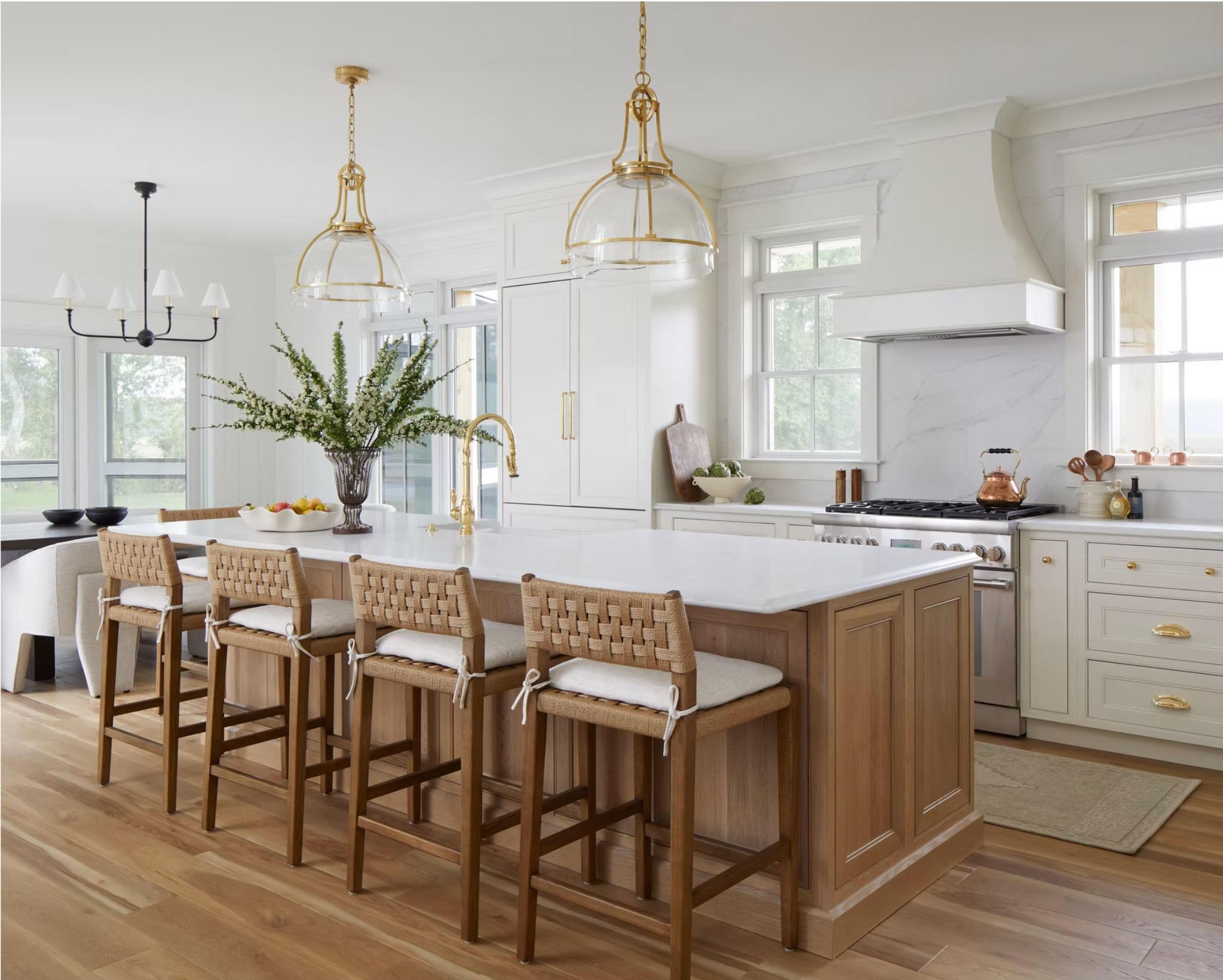
A balanced neutral kitchen. White perimeter cabinets grounded by a white oak island for depth and warmth. Credit Gable Interiors
If you have been saving kitchen inspiration lately, you may have noticed something interesting. The spaces that feel the most inviting rarely rely on just one wood tone anymore. Instead, designers are mixing woods in thoughtful, intentional ways that feel warm, layered, and effortless.
For homeowners, this trend can spark excitement and anxiety at the same time.
Mixing woods sounds beautiful in theory. In practice, it raises questions. Will it clash? Will it feel chaotic? Will it look dated faster than a safe, matching set of cabinets?
Here is the good news. When designers mix woods successfully, it is not accidental. There is a clear strategy behind it, and when that strategy is applied correctly, mixed woods actually make a space feel calmer, not busier.
As we move into 2026, this approach is becoming one of the most refined ways to bring depth and character into kitchens, baths, and built-ins.
Why Perfectly Matching Kitchens Are Losing Appeal
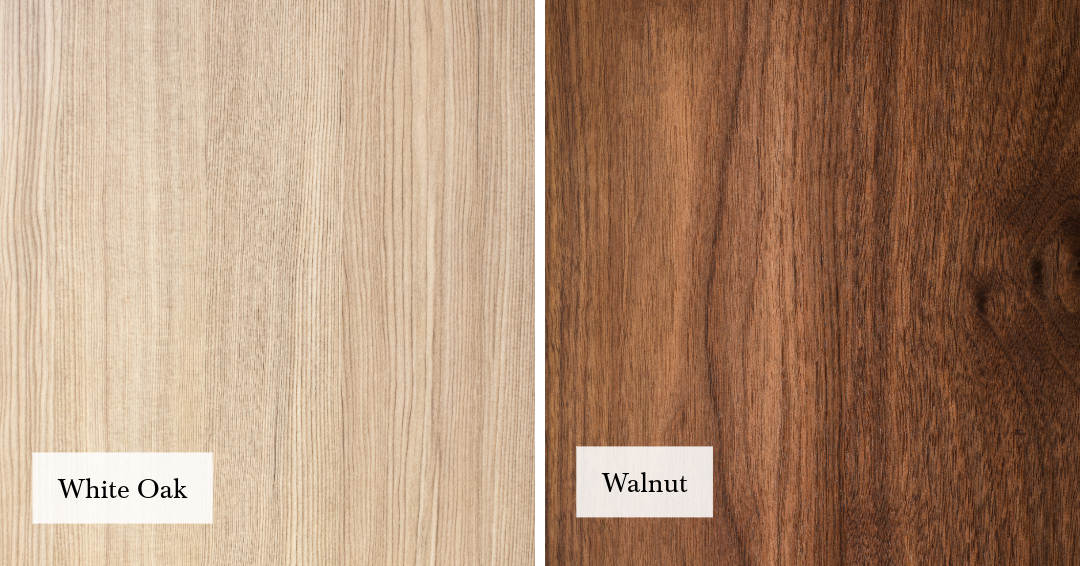
White oak or walnut. Light and airy versus rich and dramatic, both timeless, just different moods.
For a long time, uniform cabinetry felt like the safest choice. Same wood, same finish, everywhere.
While cohesive, these spaces often lack personality.
Today’s homeowners want homes that feel collected, not cookie-cutter. They want warmth without heaviness and interest without clutter. Designers are responding by creating spaces that feel layered and lived-in, even when everything is brand new.
Mixing woods allows a room to feel like it evolved naturally over time. When cabinetry is planned intentionally from the start, rather than selected piece by piece, the result feels relaxed and confident, which is exactly why following a clear, guided design process matters.
This shift is not about being trendy. It is about creating spaces that still feel right years from now.
The One Rule That Keeps Mixed Woods From Feeling Overwhelming

Light-filled and functional. White oak cabinetry paired with open wood shelving keeps the kitchen feeling open and lived-in.
If there is one rule designers never break, it is this. Every mixed-wood space needs a clear leader.
That means one primary wood sets the tone, and one or two supporting woods play secondary roles. Without this hierarchy, the room starts to feel visually noisy.
White oak often leads the way right now, and for good reason. Its soft grain, warm undertones, and versatility allow it to anchor a space without dominating it. Many homeowners choose white oak for their main cabinetry because it works across styles and ages beautifully over time, especially when incorporated into a thoughtfully designed custom cabinetry plan.
Supporting woods then add contrast and depth. Walnut introduces richness. Maple brings lightness. Alder offers warmth with a slightly more relaxed character.
Restraint is what makes this work. Designers rarely mix more than three woods in one open space.
Where Designers Mix Woods Most Successfully
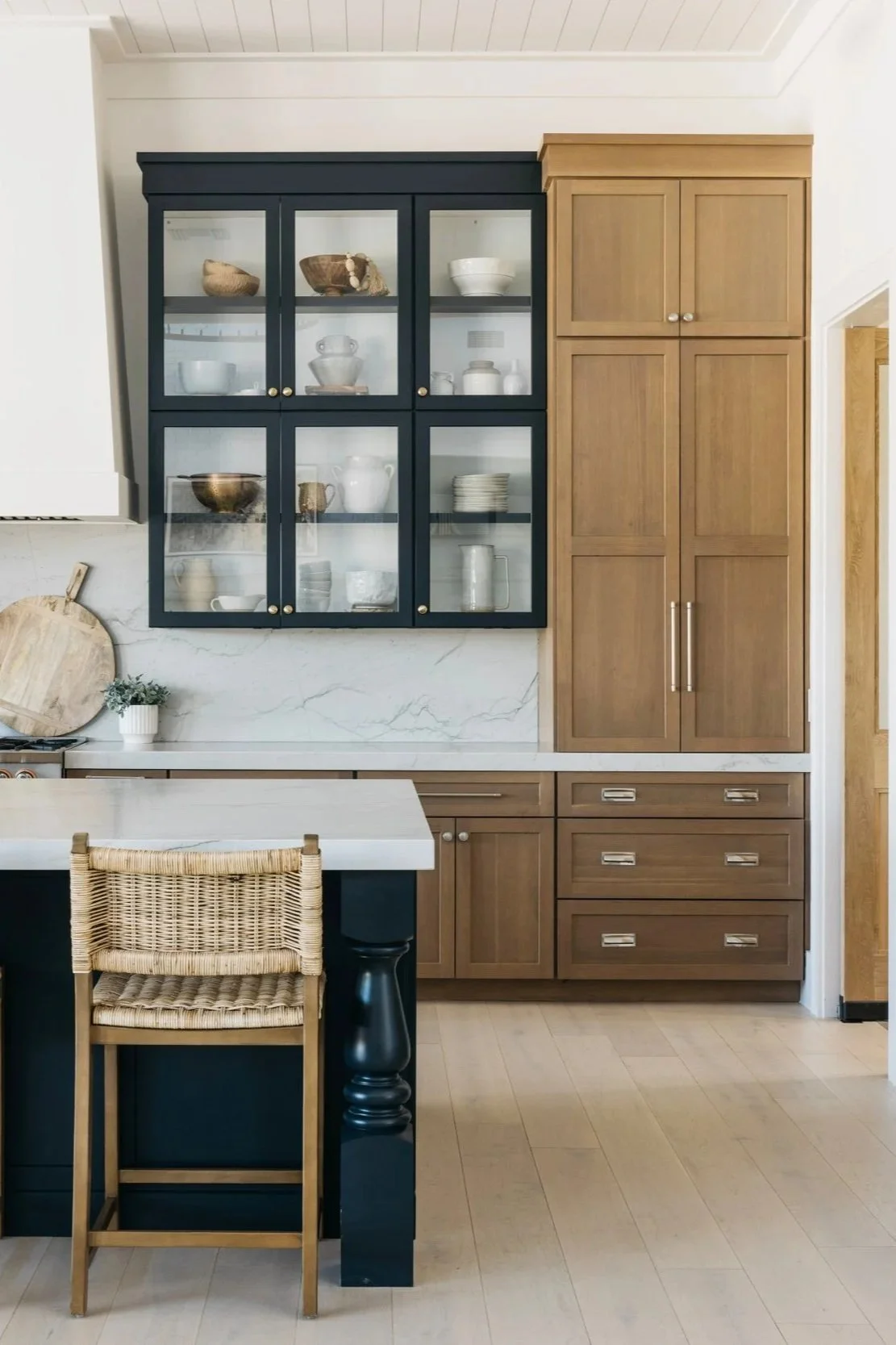
A refined mix of contrast and warmth. Glass-front cabinets paired with natural wood create depth without feeling heavy.
One of the most popular strategies is separating the island from the perimeter cabinetry.
A white oak perimeter paired with a walnut island immediately creates focus. The island feels special without pulling attention away from the rest of the kitchen. This approach works beautifully in both custom and semi-custom cabinetry, especially when proportions, finishes, and layouts are planned with intention.
Another effective approach is using a secondary wood for built-ins or furniture-style moments. Pantry cabinets, coffee bars, and adjacent shelving are perfect opportunities to add contrast without interrupting the main flow of the room.
Designers also mix woods vertically. Lighter tones may be used for upper cabinets, while deeper woods ground the space below. This keeps the room feeling open while still adding depth.
Grain Direction Is the Detail That Changes Everything
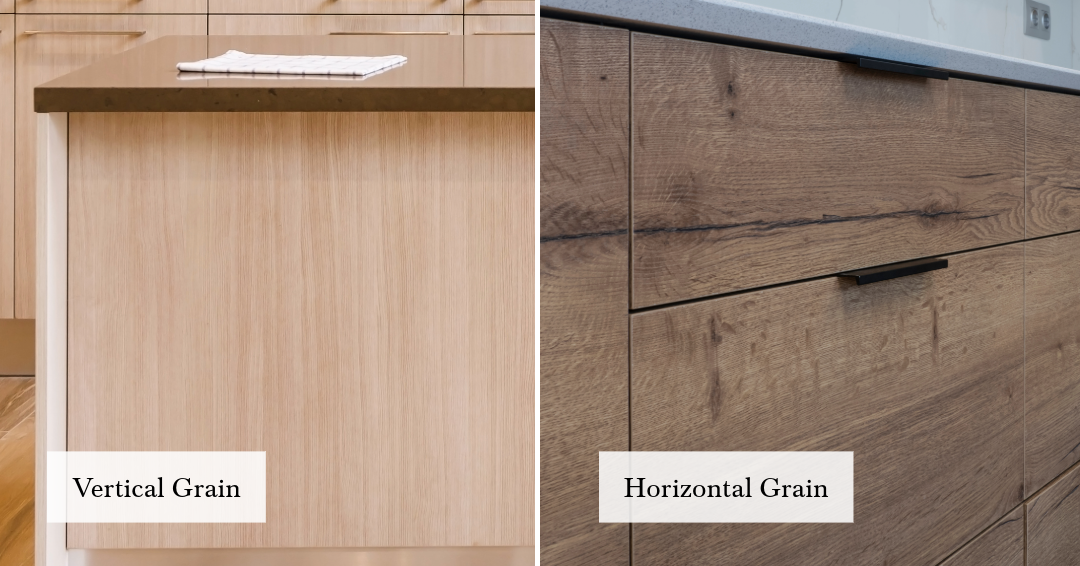
Grain direction matters. Vertical feels classic and architectural. Horizontal feels modern and streamlined.
Color matters, but grain direction often matters more.
Designers pay close attention to how wood grain runs throughout a space.
Vertical grain feels architectural and tailored. Horizontal grain feels modern and expansive.
When grain direction is intentional, it quietly organizes the room. When it is not, even beautiful materials can feel chaotic. These details are often where homeowners feel unsure or overwhelmed when planning cabinetry, which is why common questions around materials and construction come up so often.
This is why professional specification plays such an important role in mixed-wood designs.
The Finishes Designers Are Choosing for 2026
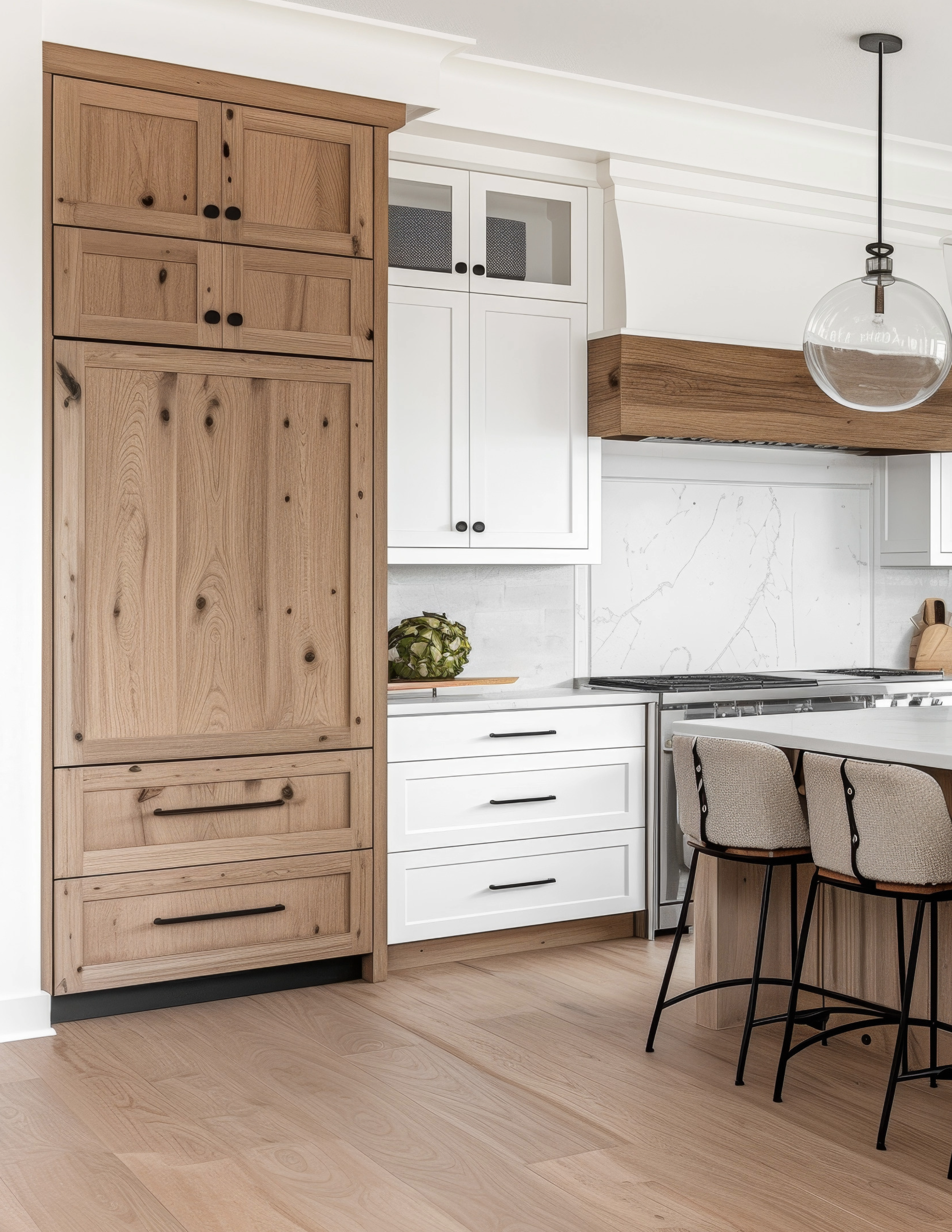
Timeless contrast. Natural wood cabinetry paired with clean white details creates warmth without losing structure.
Another reason mixed woods feel calmer today is the shift in finishes.
High-gloss wood finishes are fading. Designers are leaning toward matte, oiled, and low-sheen sealed finishes that soften contrast and allow woods to work together naturally.
These finishes also age better. Instead of highlighting every mark, they develop character over time.
Designers are also careful to align undertones, pairing warm woods together so nothing feels out of place.
Why This Look Is Not Going Anywhere
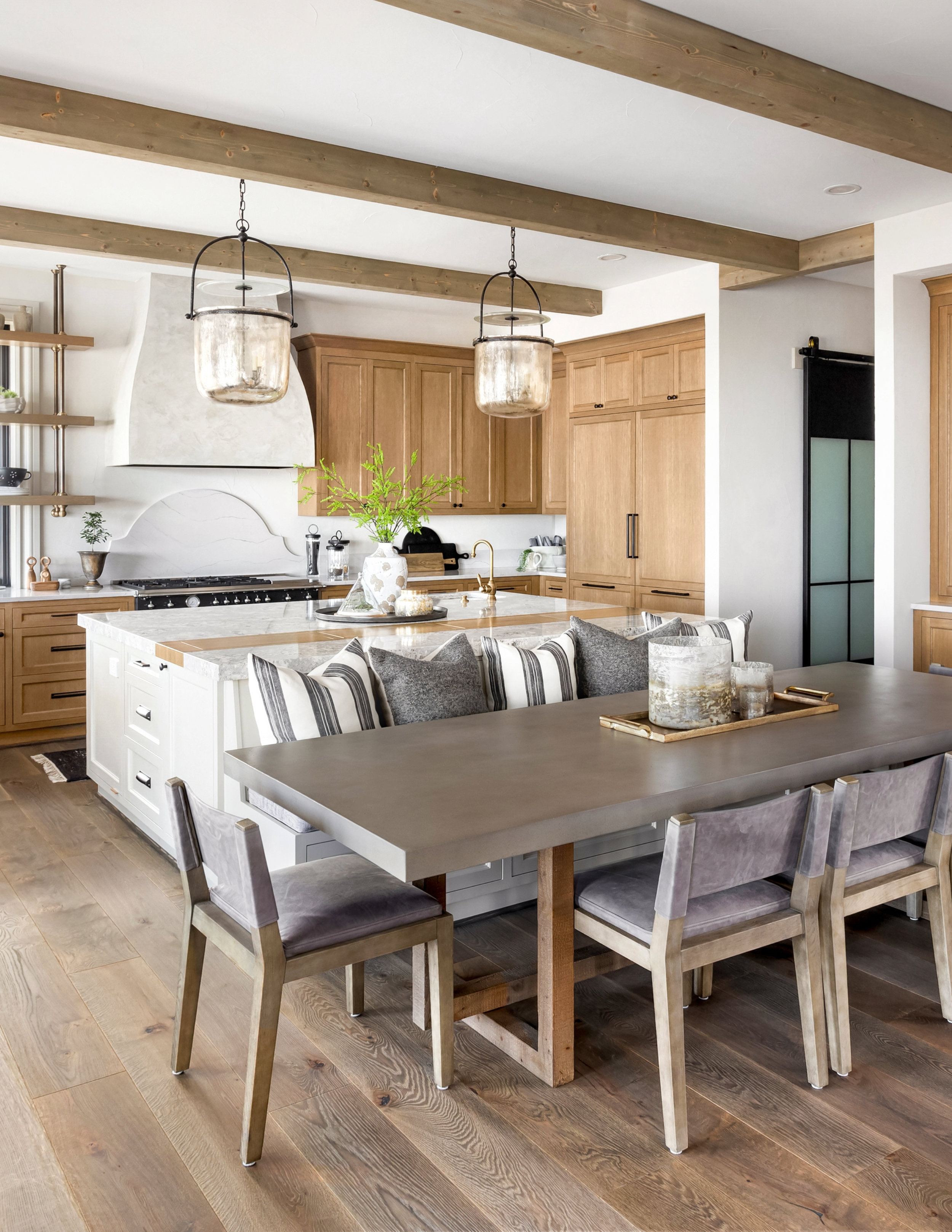
Warm, inviting, and thoughtfully layered. Natural wood cabinetry paired with soft white finishes creates a kitchen designed for gathering.
Mixing woods is more than a design moment. It reflects how people want their homes to feel.
Homeowners want spaces that feel personal, warm, and thoughtfully designed. They want cabinetry that supports everyday life without looking overly styled or mass-produced.
When done well, mixed woods create timeless spaces that feel intentional rather than trendy.
Designing a Mixed-Wood Space With Confidence
The difference between a beautifully layered space and one that feels overwhelming comes down to planning.
Knowing which wood should lead, where contrast belongs, and how grain and finish interact takes experience. That is where working with a professional cabinetry partner makes all the difference.
At Hester Family Millwork, we help homeowners and designers plan cabinetry that feels balanced, refined, and livable. From kitchens and baths to built-ins throughout the home, every detail is considered so the finished space feels intentional, not busy, across all of our cabinetry services.
If you are planning a cabinetry project and want to explore a layered wood approach that will still feel right years from now, we would love to help guide the process.
& bring the next chapter of cabinetry design into your home.