

How to Compare Cabinet Door Styles for Your Home
The Decision Homeowners Rarely Realize Is Permanent
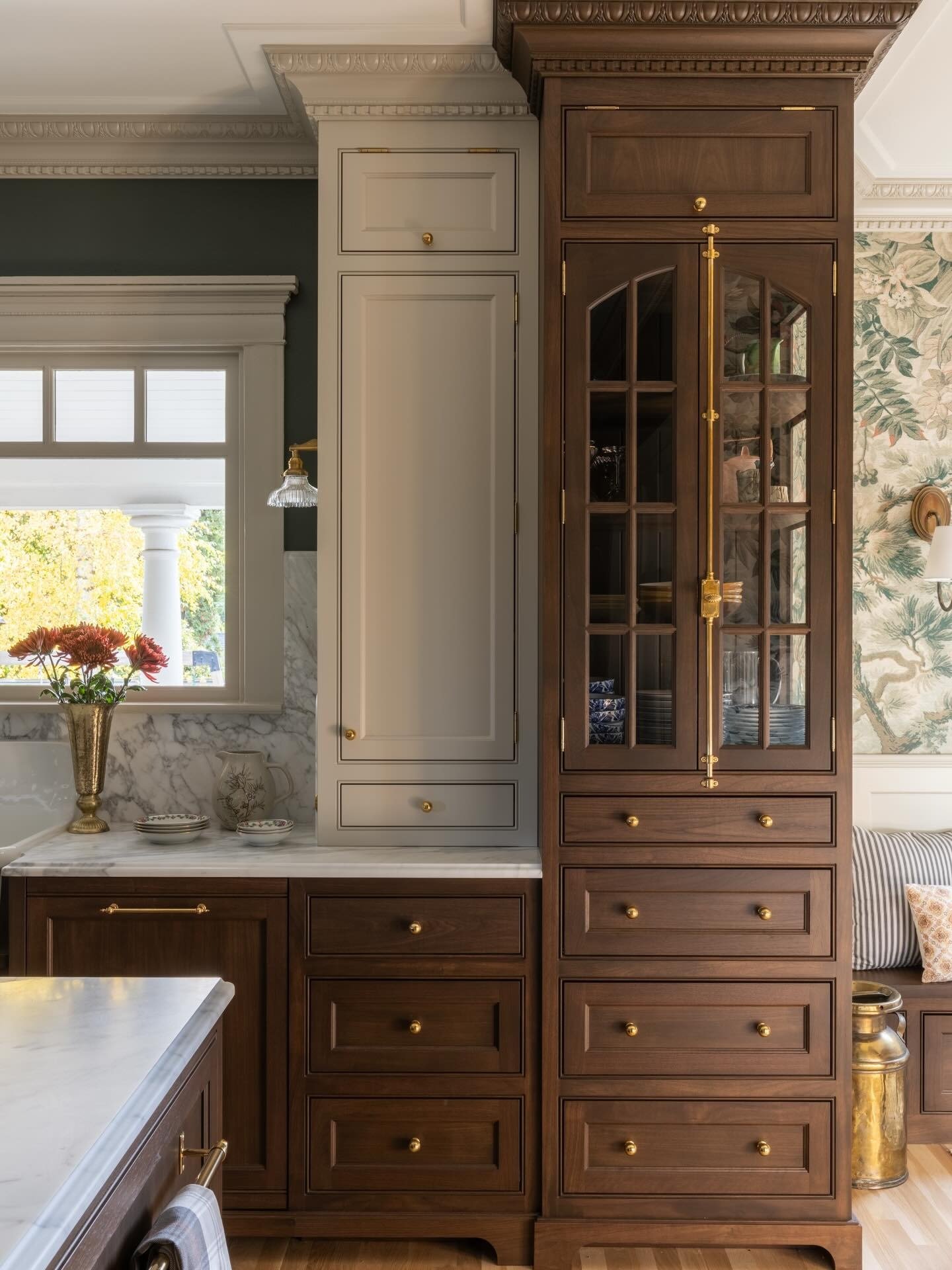
Timeless cabinet door styles come down to proportion, craftsmanship, and details that feel right for decades, cabinetry inspiration by Craft Custom Cabinets.
After more than thirty years designing and installing cabinetry, I can say this with complete confidence.
Cabinet door style is the decision homeowners regret the most when it goes wrong.
Not the color. Not the hardware. Not even the layout.
The cabinet doors define how your kitchen or bathroom feels every single day. According to National Kitchen and Bath Association design standards, cabinet doors and drawer fronts account for roughly 70 to 80 percent of all visible cabinetry surfaces in a space, making them the most visually dominant element in the room.
Once installed, they are not easily changed.
I have walked into kitchens that were only five years old and already felt outdated. I have also stood in kitchens that were twenty five years old and still felt calm, classic, and welcoming. The difference almost always comes down to one thing.
The cabinet doors.
If you are planning a remodel, this guide will help you avoid common mistakes, see yourself in the process, and choose a cabinet door style that supports your home and your life for years to come.
Why Cabinet Door Style Matters More Than You Think
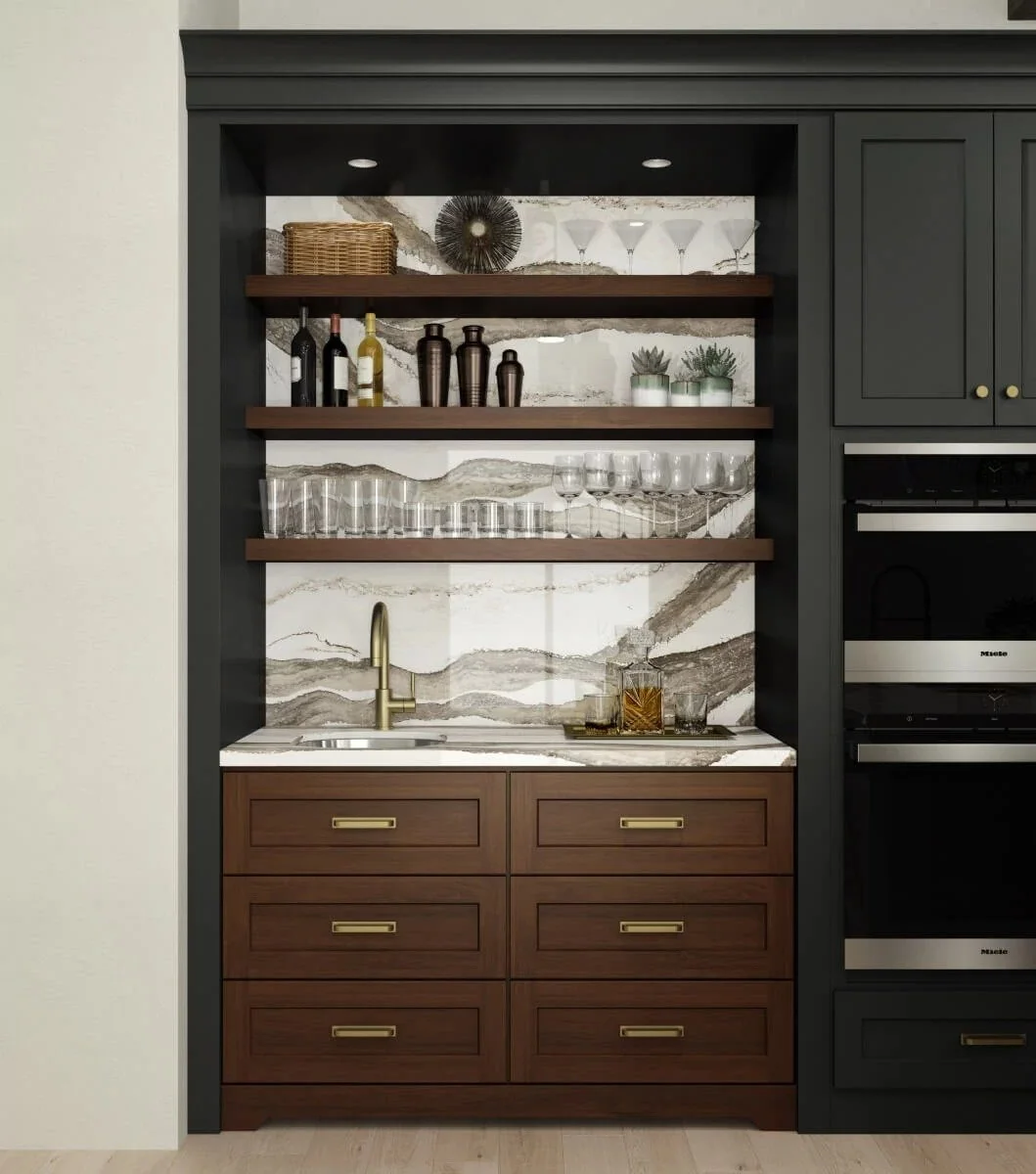
Warm wood drawers, open shelving, and layered materials show how thoughtful cabinetry design blends function with quiet luxury, inspiration by DuraSupreme.
Many homeowners assume cabinet doors are interchangeable or easy to update later. In reality, replacing cabinet doors alone typically costs 40 to 60 percent of the price of full cabinet replacement, based on national remodeling cost analyses.
Because of this cost ratio, most homeowners never replace cabinet doors once installed.
This is why cabinet door style deserves careful consideration upfront. It is not a decorative afterthought. It is a long-term decision that shapes how your home feels every day.
A helpful question I encourage clients to ask is this.
Will I still love this door style when trends change, or when my life looks different five, ten, or fifteen years from now?
The Most Common Cabinet Door Styles and What They Say About Your Home
Over decades of design work, certain door styles consistently perform better than others when it comes to longevity, versatility, and homeowner satisfaction.
Shaker Style Doors
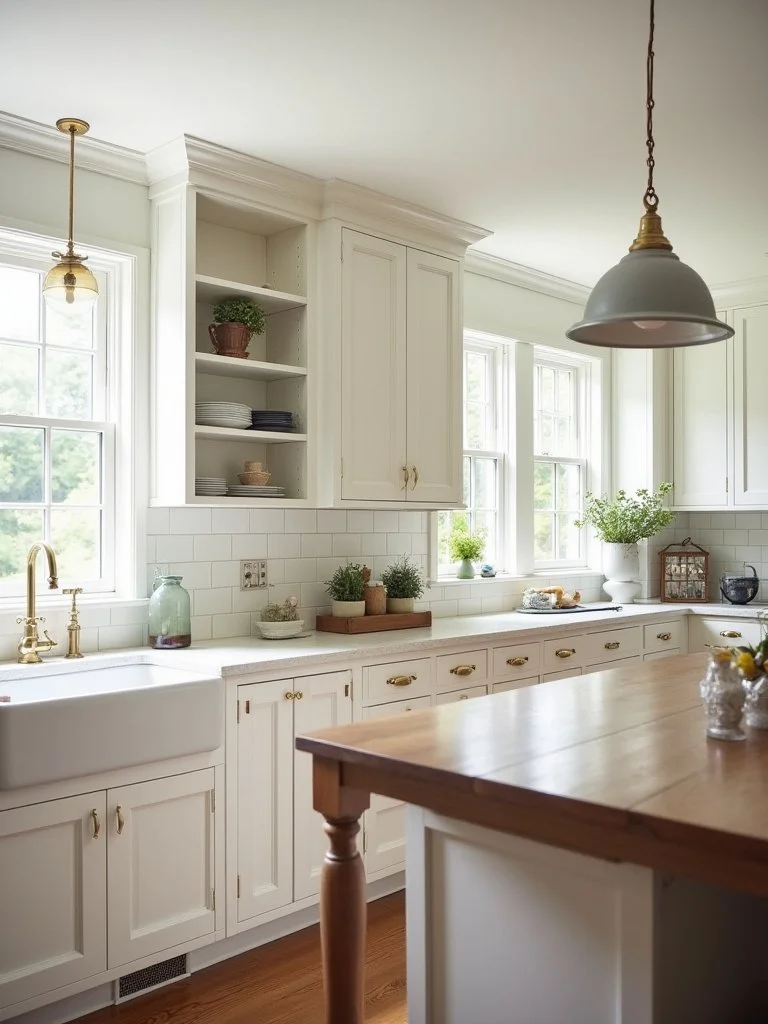
Classic white shaker cabinetry paired with open shelving and warm wood accents creates a kitchen that feels bright, balanced, and enduring. Credit DecorCrowd
Shaker doors continue to dominate cabinetry design. Industry surveys and manufacturer reporting show that over 65 percent of cabinetry installations in North America feature shaker or shaker-inspired door profiles.
The reason is simple.
Shaker doors are balanced, clean, and adaptable. They work beautifully in traditional homes, transitional spaces, and even modern kitchens when proportions are done well.
Where mistakes happen is in proportion. Oversized rails, heavy profiles, or poor craftsmanship can make shaker doors feel bulky or builder grade instead of refined.
Slim or Micro Shaker Doors
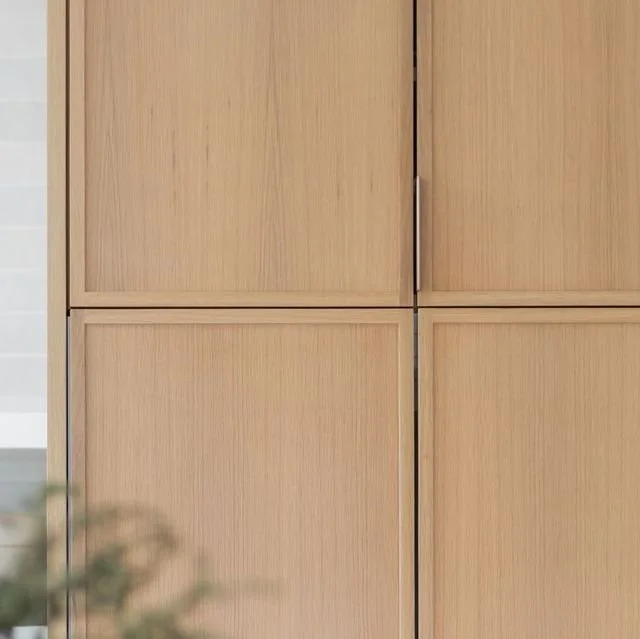
Slim profile cabinet doors in white oak show how quiet detailing and precision craftsmanship create a modern, timeless look. Credit Jessica Bremner Design
Slim shaker doors represent a subtle but important evolution in cabinetry design. They maintain the trusted look of shaker doors while offering slimmer profiles that feel lighter and more tailored.
Design professionals favor this style because it bridges classic and contemporary aesthetics, which improves long-term satisfaction and resale appeal.
Flat Panel or Slab Doors
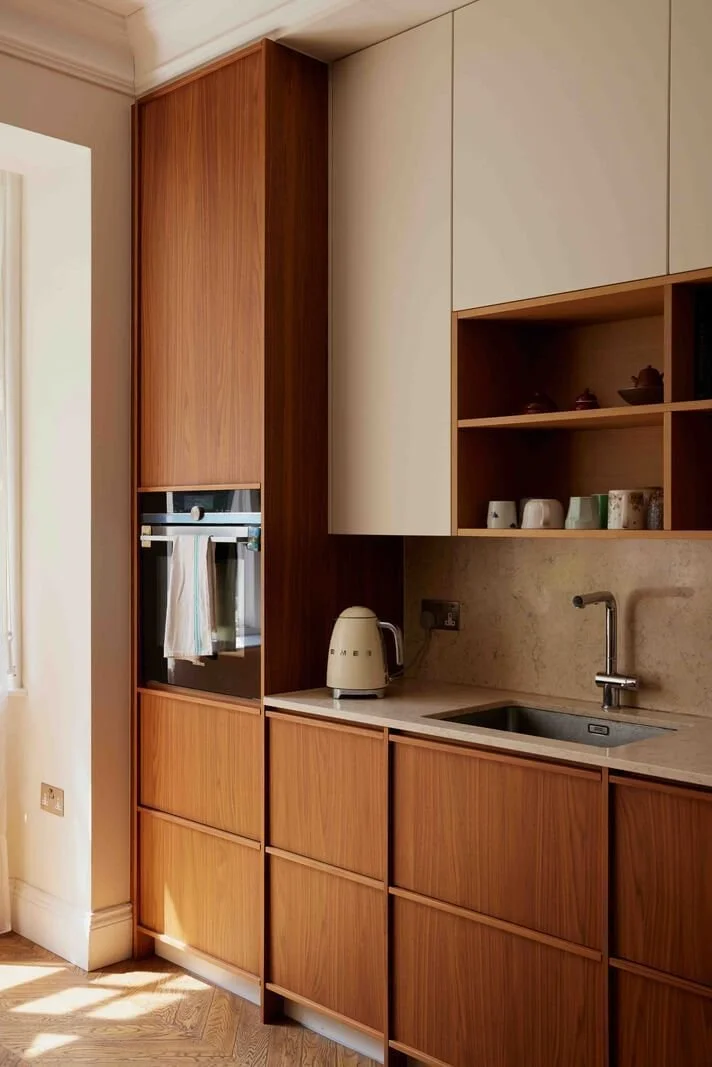
Warm wood slab cabinetry paired with soft neutral uppers shows how flat-panel doors can feel modern, inviting, and quietly refined.
Flat panel doors are often associated with modern kitchens, but they are not automatically timeless.
Material performance research shows that flat cabinet surfaces reveal wear more easily over time, including fingerprints, scratches, and finish inconsistencies, particularly in high-use kitchens.
When executed with high-quality materials and finishes, slab doors can feel sleek and intentional. When done poorly, they tend to age faster than framed styles.
Decorative or Raised Panel Doors
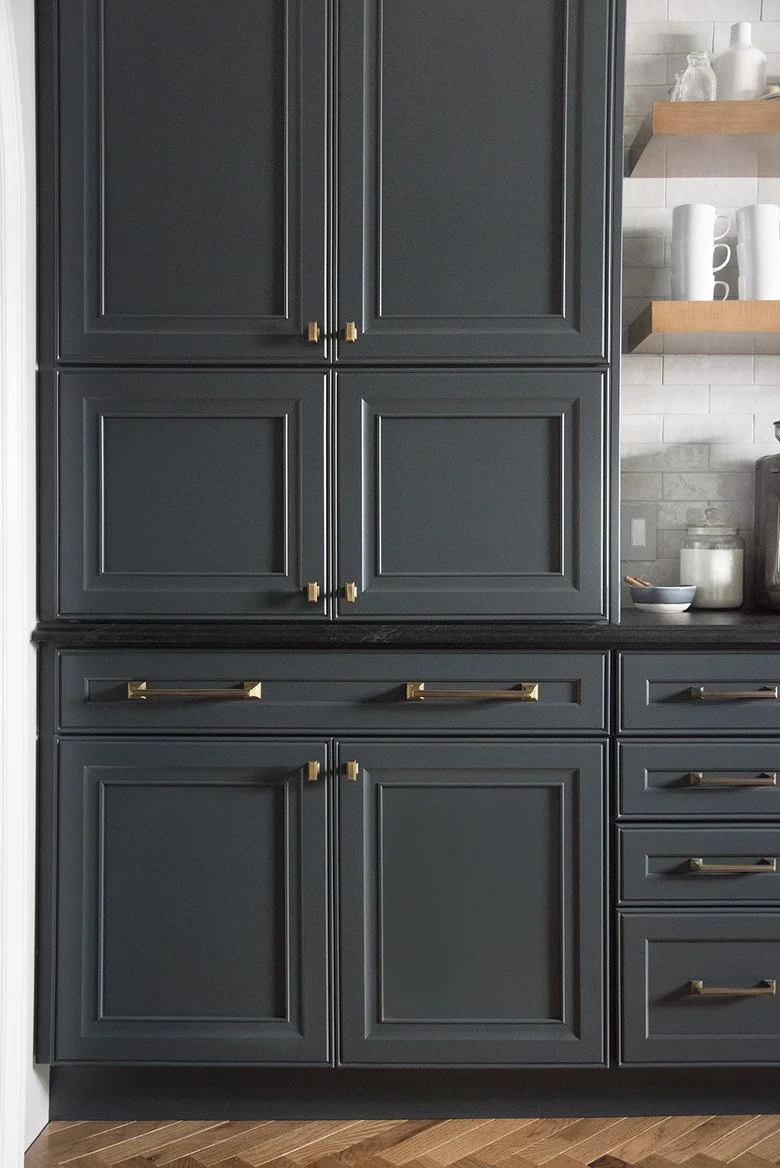
Deep-toned raised panel cabinetry paired with warm brass hardware brings depth, structure, and timeless character to a kitchen design. Credit Hunker & Room For Tuesday
Decorative and raised panel doors remain appropriate for traditional and historic homes, but they are the most style-specific option. Design guidance from the National Kitchen and Bath Association indicates that these profiles are more likely to feel dated if used outside of their architectural context.
These doors require thoughtful proportion and restraint to age gracefully.
How Cabinet Door Style Should Match the Architecture of Your Home
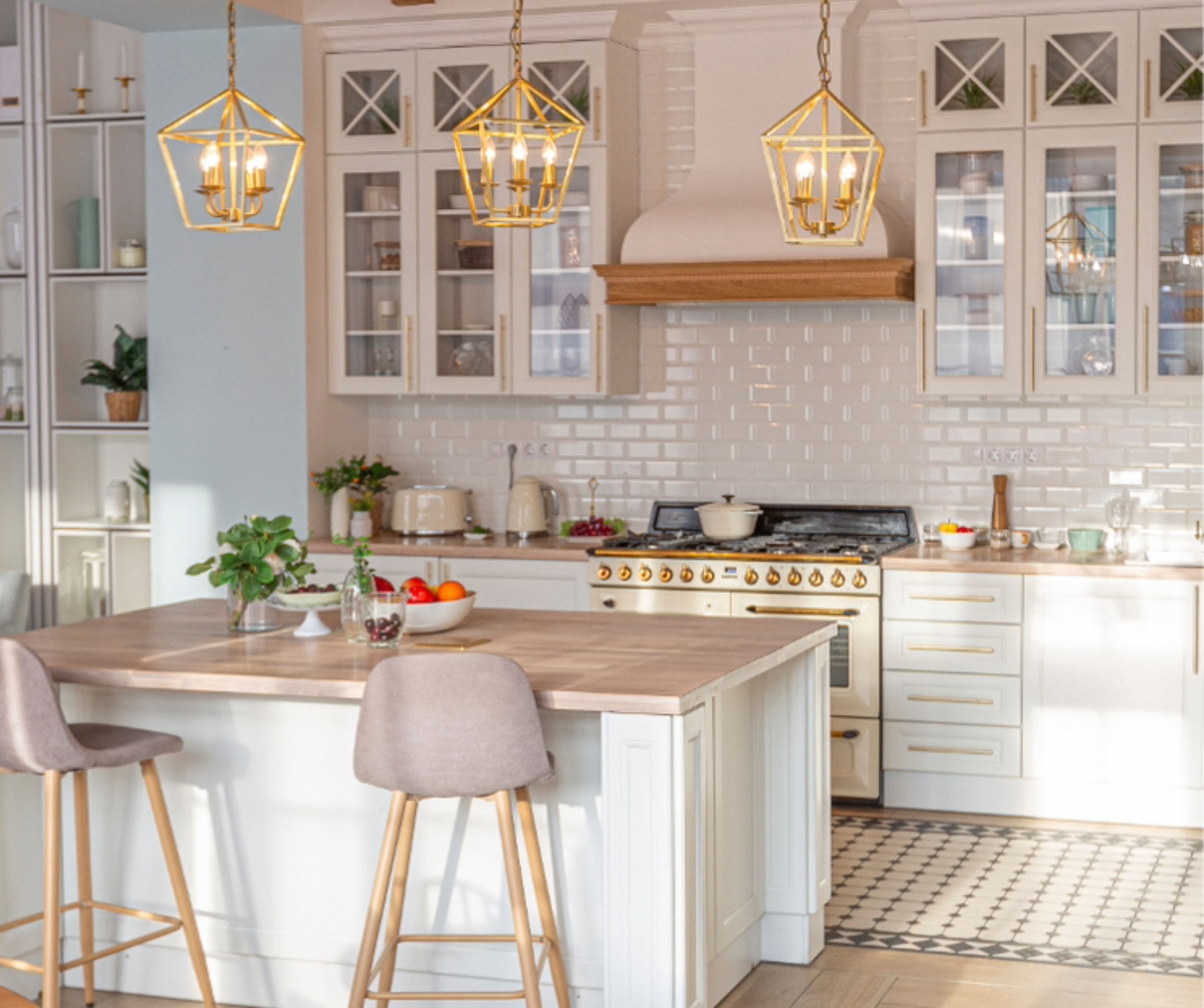
Classic white shaker cabinetry paired with glass-front uppers, brass lighting, and warm wood accents creates a kitchen that feels timeless, welcoming, and thoughtfully layered.
One of the most common mistakes homeowners make is choosing cabinet doors without considering the architecture of the home itself.
Professional kitchen design standards emphasize that cabinetry should visually align with a home’s era and structure to create cohesion and long-term appeal.
When cabinetry respects the home’s architecture, the space feels intentional rather than forced.
Lifestyle Matters More Than Trends
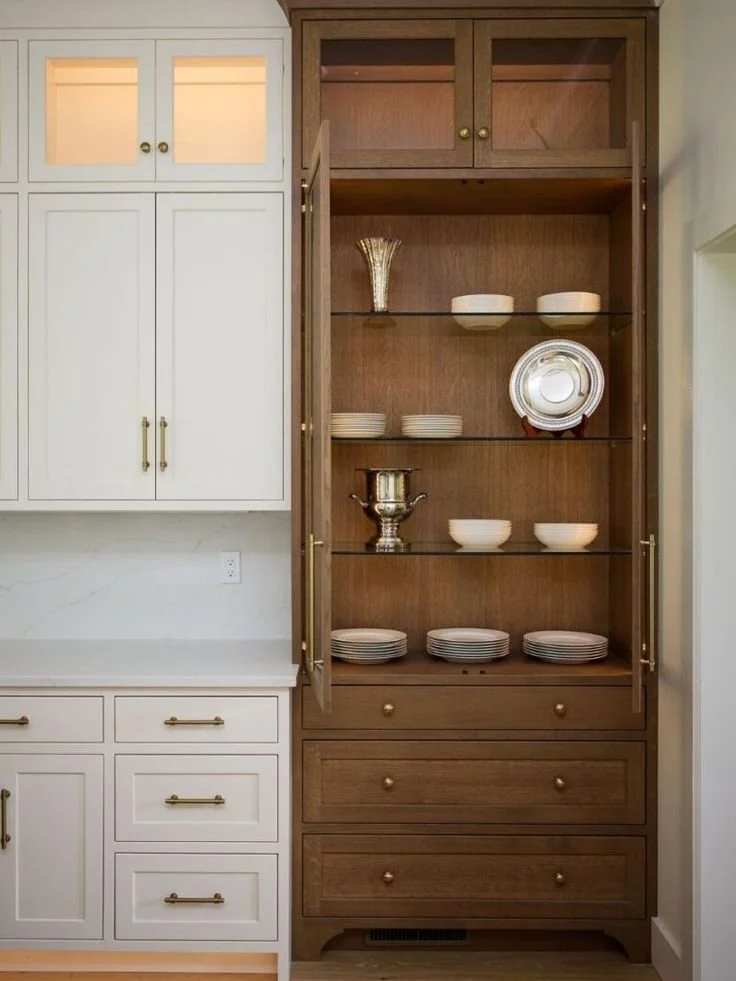
Two-tone cabinetry with warm wood and soft white finishes shows how thoughtful contrast can add depth, storage, and timeless character to a kitchen. Credit Kloter Farms
While design media often emphasizes trends, long-term homeowner satisfaction tells a different story.
Research from the National Association of Home Builders and annual Houzz kitchen surveys consistently shows that function-driven remodels outperform trend-driven remodels in long-term homeowner satisfaction, with storage, usability, and workflow ranking higher than visual trends once homeowners live in the space.
Before choosing a cabinet door style, homeowners should consider daily use, maintenance expectations, and household needs, not just appearance.
Timeless Always Wins Over Trendy
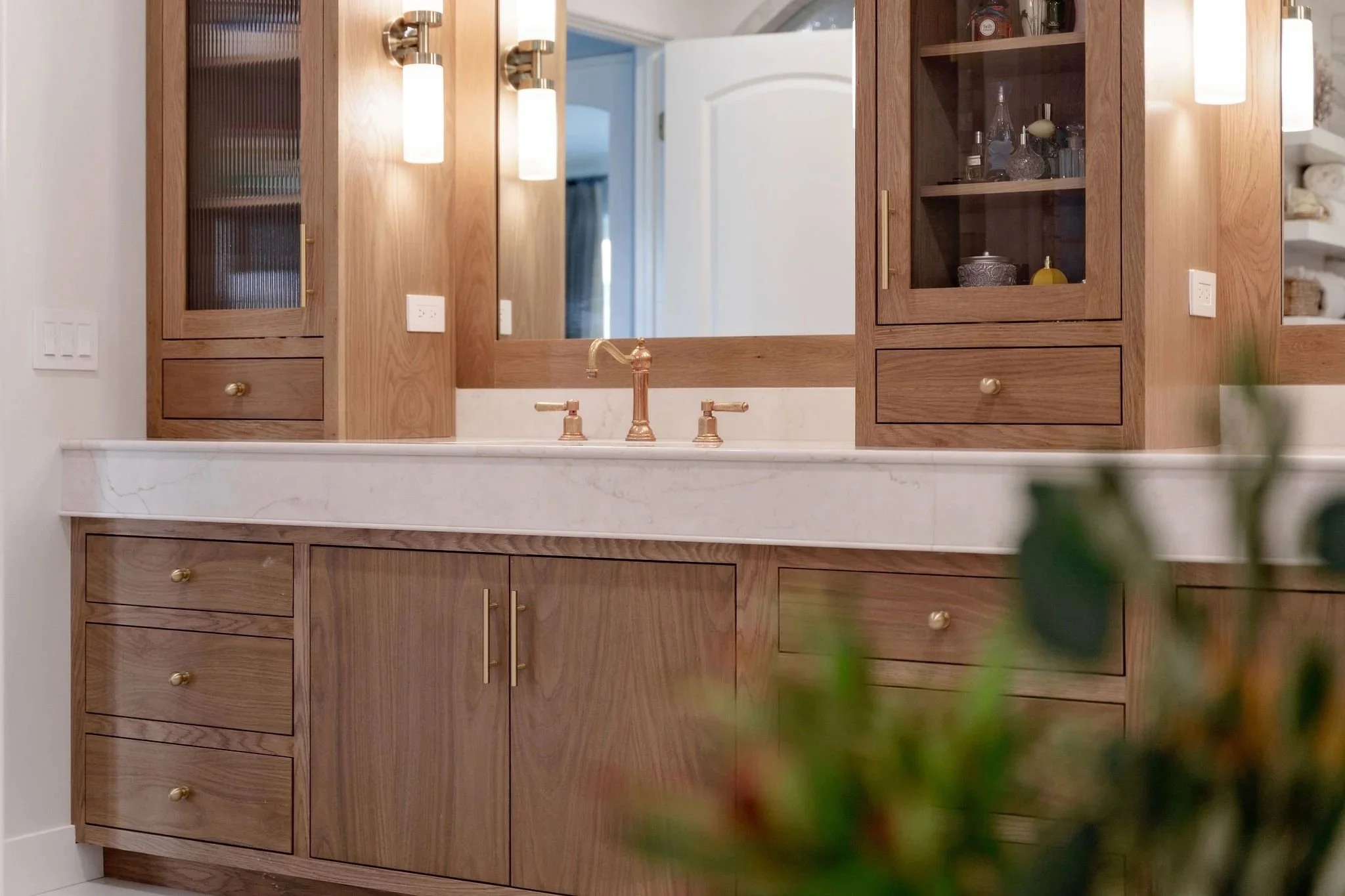
Warm wood vanity cabinetry paired with classic brass fixtures and integrated storage creates a bathroom that feels refined, functional, and timeless. Credit Native Oak Cabientry
Cabinetry is considered a long-term investment. Industry standards estimate a 20 to 30 year lifespan for quality cabinetry in a well-maintained home.
Because cabinetry lasts far longer than most design trends, door styles with balanced proportions, subtle detailing, and quality craftsmanship consistently perform best over time.
Final Thoughts: Let Experience Guide Your Choice
You do not need to know every design term or trend to make a smart cabinetry decision.
You need guidance from someone who has seen what lasts.
After more than thirty years in cabinetry and interior design, I can say this with certainty. The right cabinet door style quietly supports your home, your routines, and your future without demanding attention.
If you are planning a remodel and want clarity instead of overwhelm, we are here to help you choose cabinetry that feels right now and still feels right years from now.
Let’s talk cabinetry and make this decision one you never regret.
& bring the next chapter of cabinetry design into your home.